
What Is in the Apple Matters
Not all apple cider vinegar begins with the same apples.
Most apples grown for eating and juice are selected to be sweet, crisp, mild, and approachable. Traditional cider apples are different. Many of the varieties we use were selected for something modern dessert apples intentionally have very little of:
Tannins.
These naturally occurring plant compounds give traditional cider apples their bitterness, astringency, structure, and complexity. They are also one of the reasons we believe the fruit you start with matters just as much as the fermentation that follows.
At Pome, we do not simply assume our vinegar contains more tannin.
We test it.
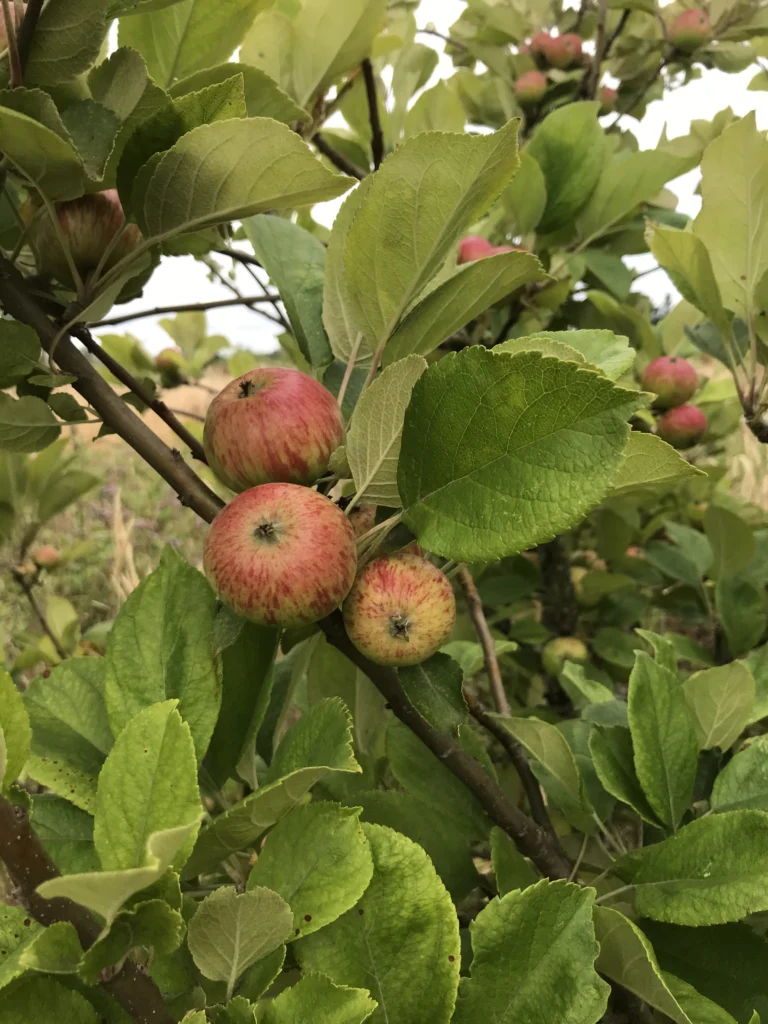
What Are Tannins?
Tannins are a family of naturally occurring polyphenols found throughout the plant world.
They are present in foods and beverages such as apples, grapes, berries, tea, cocoa, and wine. If you have ever experienced the drying sensation of a structured red wine or the slight bitterness of strong tea, you have experienced tannins.
In fruit, tannins are part of the plant’s natural chemistry. They contribute bitterness and astringency, and scientists study tannins and other polyphenols for their antioxidant activity and for the many ways these compounds interact with biological systems.
We are careful about what that means.
Pome vinegar is not medicine, and we do not promise that tannins will prevent or treat disease. What we can say is simpler: traditional cider fruit naturally contains substantially more of these polyphenolic compounds than the mild apples typically selected for eating and juice.
And we think preserving more of what was naturally present in the apple is worthwhile.
Hard Tannins. Soft Tannins.
Cider makers often describe tannins as either hard or soft, referring to differences in the tannins themselves and how we perceive them.
Hard tannins
Hard tannins tend to present themselves as bitterness.
They can give an apple an intensely bitter quality that would make it an unusual choice for your lunchbox, but that bitterness can contribute structure and complexity when the fruit is used for cider and vinegar.
Soft tannins
Soft tannins are experienced more as astringency: that drying, puckering sensation you may recognize from tea or red wine.
These tannins contribute body and texture, giving a fermented beverage a sense of depth that acidity alone cannot provide.
Traditional cider making values both.
The very characteristics that make some cider apples less desirable as fresh eating fruit are precisely what make them so valuable to us.
Apples Bred for Cider, Not the Produce Aisle
For centuries, cider makers selected apples differently from fruit growers producing apples for the table.
A great dessert apple should be pleasant to bite into.
A great cider apple does not have to be.
Traditional cider varieties are commonly classified according to their balance of sugar, acid, and tannin. Among them are two categories especially important to Pome:
Bittersweet apples
High in tannin with relatively lower acidity. They provide richness, structure, bitterness, and depth.
Bittersharp apples
High in tannin and acidity. They bring both structure and brightness.
Specialized cider apples can contain several times the tannin found in apples intended primarily for eating. That difference is one of the reasons traditional cider varieties have been prized for generations.
These are the kinds of apples we seek out for Pome.
Why Most National Vinegar Starts Differently
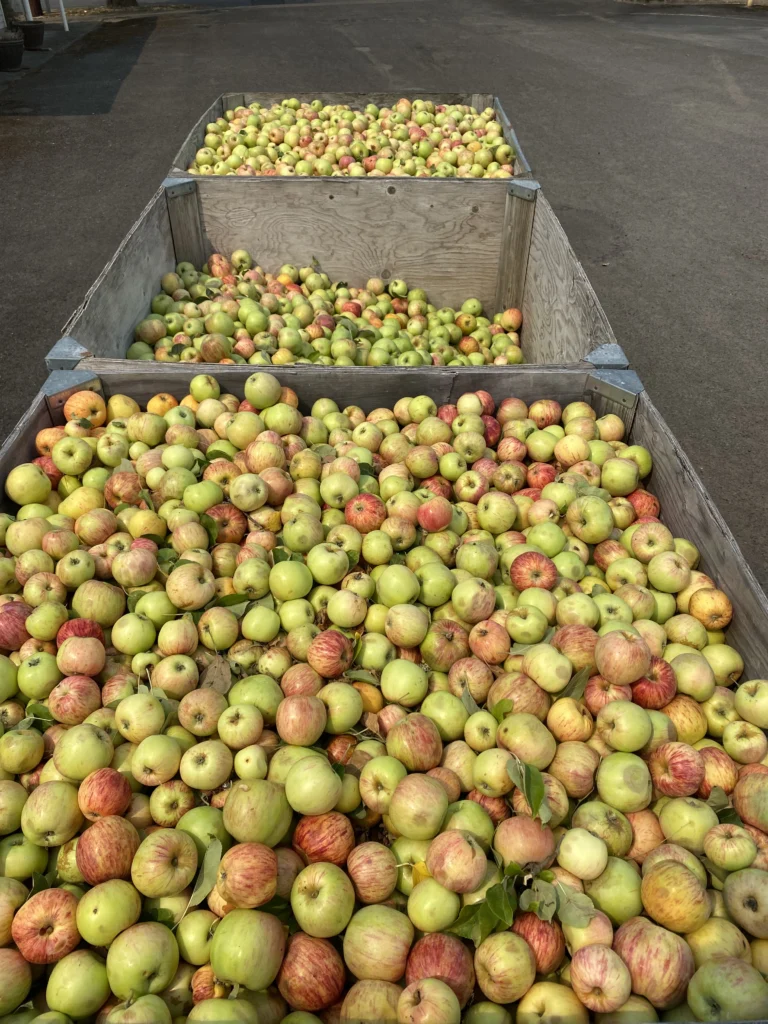
Large national vinegar brands operate at an entirely different scale.
The apple industry produces enormous quantities of dessert and juicing apples. These varieties are ideal for fresh consumption and commodity juice because consumers generally prefer apples without pronounced bitterness or astringency.
But reducing bitterness and astringency also means selecting away from one of the characteristics traditional cider makers value most: tannin.
Pome begins with cider in the traditional sense of the word: fermented juice made from apples selected specifically for fermentation.
That gives us something industrial processing cannot add later.
It gives us a different starting point.
But Does the Tannin Survive Fermentation?
That is the important question.
It would be easy to tell a romantic story about heirloom apples and traditional fermentation and stop there.
We do not.
The chemistry of fruit changes during pressing, alcoholic fermentation, acetification, barrel aging, and maturation. What matters is not simply what was present in the apple.
What matters is what is still present in the bottle.
That is why we test our vinegar.
Tested by an Independent Laboratory
Every year, we send samples from our vinegar batches to an independent third-party laboratory for analysis.
Alongside our own vinegar, we submit a sample of a leading nationally distributed apple cider vinegar as a benchmark.
That gives us a real-world comparison between two very different approaches to apple cider vinegar: traditional cider apples and slow fermentation on one side, a leading nationally available apple cider vinegar on the other.
We do not want “high tannin” to be simply a marketing phrase.
We want to measure it. Year after year. Batch after batch.
The Results
Do not take our word for it. Look at the numbers.
In a 2024 ETS Laboratories analysis of submitted samples, Pome Bittersweet measured 351.0 mg/L tannin, compared with 100.9 mg/L in the tested dessert apple cider vinegar sample. Pome Marionberry measured 282.3 mg/L. Results apply only to the submitted samples.
| Sample | Tannin concentration |
|---|---|
| POME Bittersweet | 351.0 mg/L |
| POME Marionberry | 282.3 mg/L |
| Tested dessert apple cider vinegar sample | 100.9 mg/L |
ETS Laboratories report 2061603. Samples received 14 August 2024, reported 20 August 2024. That is approximately 3.5 times the tannin concentration for Bittersweet and 2.8 times for Marionberry in this sample comparison. These results relate only to the samples submitted and are not a guarantee about every bottle or every other producer’s batch. Tannin concentration is a compositional measurement. It is not a health claim.
Why We Test Every Year
Apples are not manufactured ingredients.
Variety matters. Growing conditions matter. Harvest matters. Fermentation matters. Aging matters.
That means we do not believe one favorable laboratory result should become a claim we repeat forever.
We test again.
Annual third-party analysis allows us to verify that the characteristic we care about in our apples is still present in each year’s finished vinegar, and lets us compare those results against the same kind of vinegar most consumers already know.
If the numbers change, we will know.
That is the point of testing.
Fruit First. Then Fermentation.
There are faster ways to make vinegar.
There are cheaper apples to make it from.
We choose traditional bittersweet and bittersharp cider fruit because these apples contain compounds that disappeared from much of the modern juice supply for a simple reason: they do not make particularly good eating apples.
For us, that is a feature.
Tannin gives cider structure. It gives vinegar complexity. And it gives us something measurable that helps distinguish vinegar made from traditional cider fruit from vinegar made for the mass market.
So we make it the slow way.
And then we test whether the difference made it all the way into the bottle.
Better fruit. Traditional fermentation. Measured results.
That is Pome. The fruit behind the numbers is on Heritage Apples.