
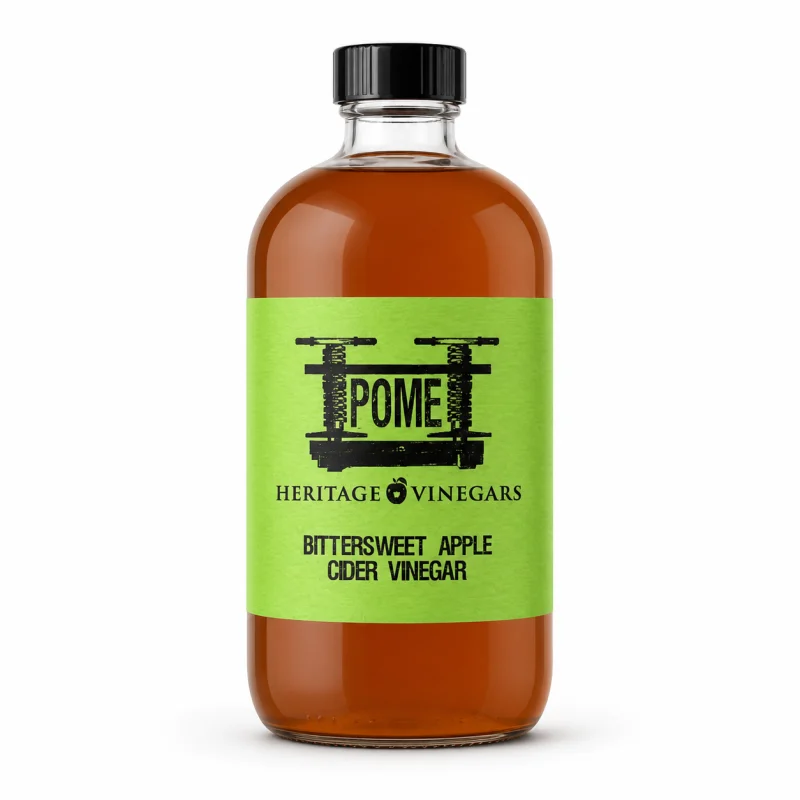
This is the foundation. It is made from bittersweet and bittersharp Pacific Northwest cider apples, fruit grown for tannin, sugar and depth rather than for eating. This is what apple cider vinegar was before commodity apples replaced real cider fruit.
It is darker than what you are used to, and more complex. The tannin structure of cider apples carries through fermentation, and it shows in both the colour and the depth of the finished vinegar.
What makes it different
- Source fruit. Bittersweet and bittersharp cider apples, not dessert apples grown for the grocery shelf.
- Fermentation. The slow Orleans method, a traditional surface fermentation rather than forced industrial aeration.
- Dilution. None. What comes out of the vessel goes into the bottle.
- The mother. Retained. Raw and unfiltered.
- Acidity. Minimum 5 percent.
We had this vinegar tested against a supermarket apple cider vinegar by an independent laboratory. The results, and what they do and do not mean, are on our Tannins and Testing page.
Ingredients
Raw apple cider vinegar with the mother. That is the complete ingredient list.
How to use it
Drinking. One tablespoon in 8 to 12 ounces of water. Always dilute. Never drink it straight, as undiluted vinegar of any brand is hard on tooth enamel and on the throat.
Cooking. Vinaigrettes, marinades, braises. Start with half what you would normally use, because this is stronger and more structured than most apple cider vinegar.
Storage. Room temperature, out of direct sun. No refrigeration needed. Shake before use to redistribute the mother.
Raw and unpasteurised, containing live cultures. Sediment and haze are natural. If you are pregnant, immunocompromised or managing a medical condition, talk to your healthcare provider before adding any vinegar to your routine.
Reviews
There are no reviews yet.