
It Begins With the Fruit
Before fermentation, before barrels, before vinegar, there are apples.
For Pome, the variety of apple is not a minor detail. It is one of the most important decisions we make.
Most apples grown in the United States are selected for fresh eating or juice. They are bred to be crisp, sweet, attractive, productive, and easy to enjoy straight from the tree.
Traditional cider apples were selected for something different.
They were chosen for what happens after fermentation.
Some are intensely bitter. Some are sharply acidic. Some are aromatic but small. Some have flavors that would make them an unlikely choice for a supermarket produce aisle.
But in cider and vinegar, those characteristics become assets.
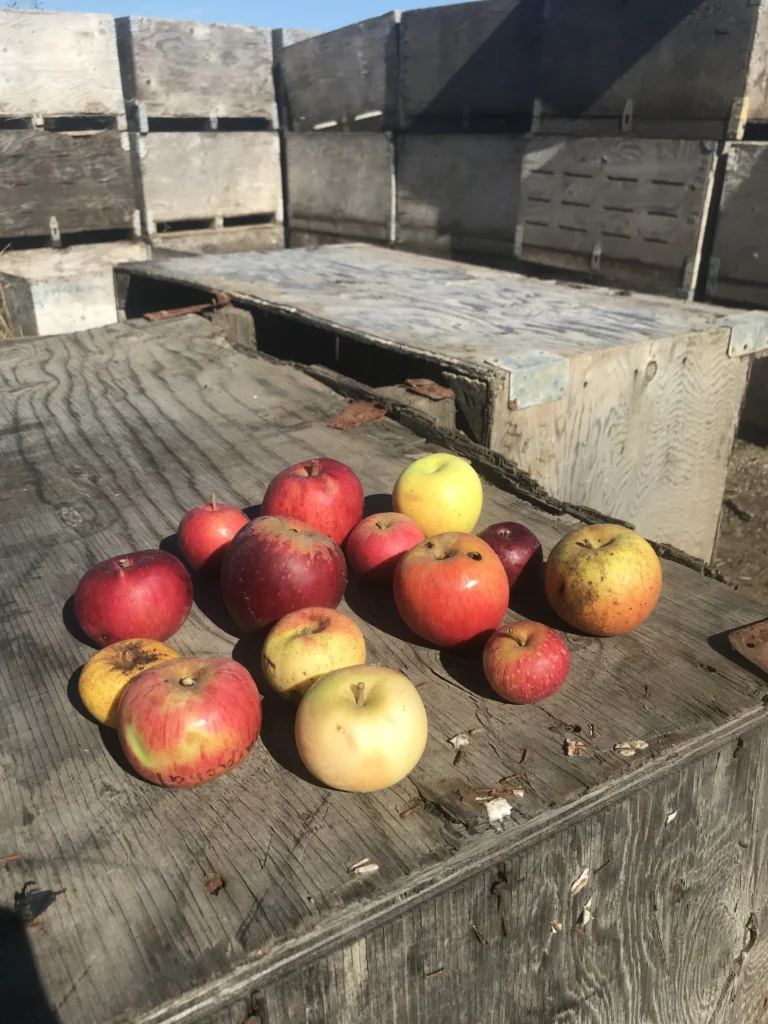
Apples Grown for Fermentation
Traditional cidermakers think about apples differently from growers producing fruit primarily for eating.
A cider apple can contribute:
- Tannin for bitterness, astringency, structure, and depth.
- Acid for brightness and balance.
- Sugar for fermentation and body.
- Aroma for the fruit character that survives into cider and, eventually, vinegar.
No single apple needs to provide everything.
Historically, cider was made by blending multiple varieties, each contributing something different to the finished fermentation.
That way of thinking about fruit is at the center of Pome.
Bittersweet, Bittersharp, Sharp and Sweet
Cider apples are often described according to their relative levels of tannin and acidity.
Bittersweet
Higher tannin, lower acidity. These are some of the most distinctive cider apples. Their bitterness and astringency can make them challenging to eat fresh, but those same qualities can provide remarkable structure after fermentation.
Bittersharp
Higher tannin, higher acidity. Bittersharps combine the structure of tannin with the brightness of acid. For a cidermaker, that can make them especially valuable.
Sharp
Higher acidity, lower tannin. Sharp apples contribute freshness, brightness, and balance.
Sweet
Lower acidity and lower tannin. These apples often provide sugar, fruit character, and fermentation potential without the pronounced bitterness or acidity of the other categories.
None is inherently better than another.
What matters is what each apple contributes.
Why Tannin Matters to Us
Of all the characteristics found in traditional cider fruit, tannin is particularly important to Pome.
Tannins are naturally occurring plant polyphenols responsible for much of the bitterness and astringency found in traditional cider apples.
Modern dessert apples generally have much less of those characteristics because bitterness and mouth-drying astringency are not qualities most people want when biting into an apple.
Cidermakers see that differently.
The very compounds that can make an apple less appealing at the table can make it more interesting in a fermentation.
That is one reason we continue seeking out bittersweet and bittersharp varieties for Pome.
Learn more on our Tannins and Testing page, where we publish the laboratory figures.
Learning What Grows Here
Our relationship with cider apples began long before Pome.
Galen Williams began planting cider varieties in Oregon’s northern Willamette Valley in 2010, when relatively few orchards in the region were devoted to traditional cider fruit.
There was no guarantee that a famous European cider apple would perform the same way in Oregon.
So much of the learning happened one variety and one harvest at a time.
- Which trees adapted well to our climate?
- Which produced consistently?
- Which ripened properly?
- Which were susceptible to problems in the orchard?
- Which produced fruit worth the difficulty of growing them?
And ultimately: which apples made the best cider here?
More than a decade of growing, fermenting, tasting, and comparing varieties has shaped the fruit we value today.
A Pacific Northwest Expression
Many of the cider varieties we work with have histories reaching back centuries and across the Atlantic.
Their names and origins may be English, French, American, or something else entirely.
But once planted here, they become part of a different place.
The soils are different. The growing season is different. The rainfall is different. The harvest is different.
Our goal is not simply to reproduce an English or French cider tradition in Oregon.
It is to learn from those traditions and discover what these apples can become when grown and fermented in the Pacific Northwest.
An Orchard Is a Long Experiment
Apples teach patience before they ever reach the cellar.
Planting a new variety means waiting years before the tree produces enough fruit to understand it.
Then comes another harvest. And another.
A variety that looks promising one season may struggle the next. Another may seem unremarkable in the orchard but become indispensable after fermentation.
That makes an orchard a long-running experiment.
The only way to really learn the fruit is to grow it, press it, ferment it, taste it, and repeat the process over many years.
That experience is part of what eventually led to Pome.
The Apples We Use
The varieties in this section are some of the apples that have shaped our cider and vinegar making.
Each has its own history. Each behaves differently in the orchard. Each contributes something different in the cellar.
Some are treasured for tannin. Others for acidity, aroma, or the way they perform in Oregon’s climate.
This is not intended to be an exhaustive catalog of every apple we have ever grown or fermented. Think of it as a field guide to the fruit behind Pome.
More are added as each name, origin and orchard record is confirmed against our own notes. Rather than publish a history written from memory, we would rather publish fewer apples accurately.
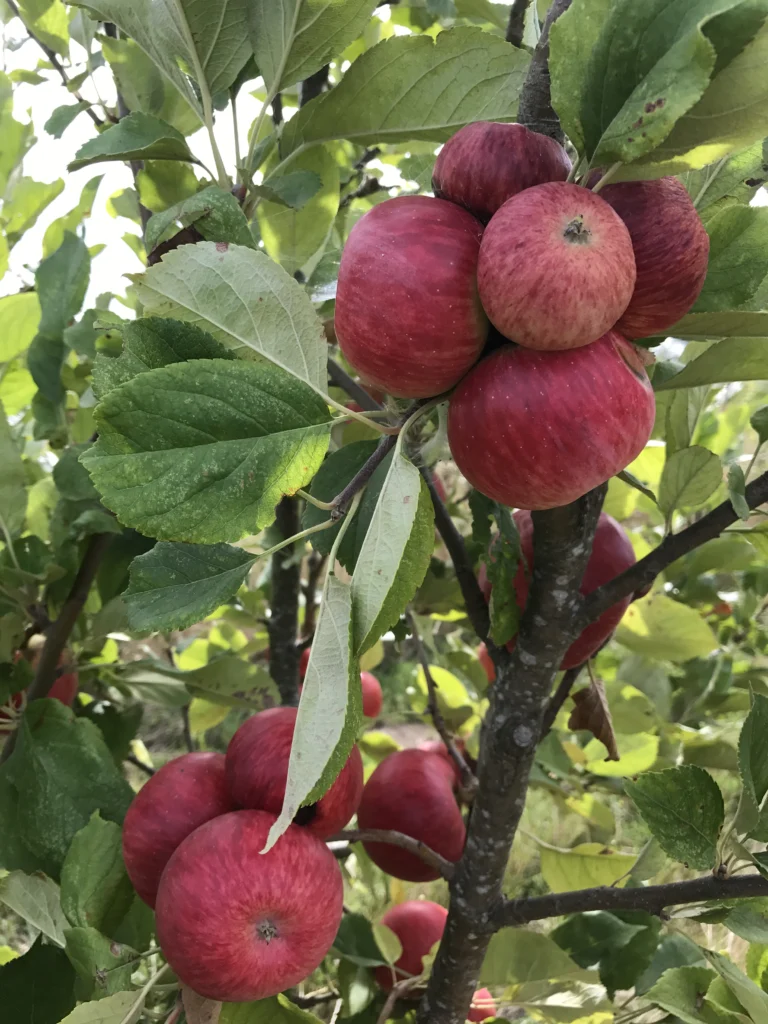
Brown’s Apple
A Devon variety, deep red on the tree. Brisk acidity with only light tannin, doing the job a sharp is meant to do: brightness and lift against the heavier bittersweets.
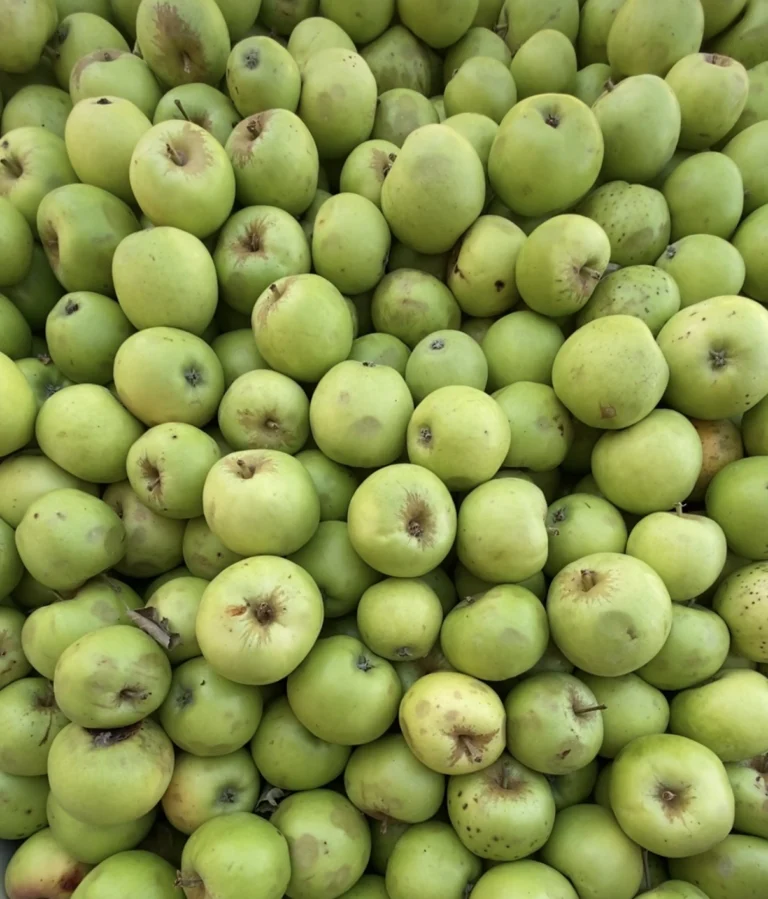
Bulmer’s Norman
A large green bittersweet of French origin, long planted in England for how heavily and how early it crops. Soft tannin and plenty of juice, which makes it a workhorse rather than a soloist.
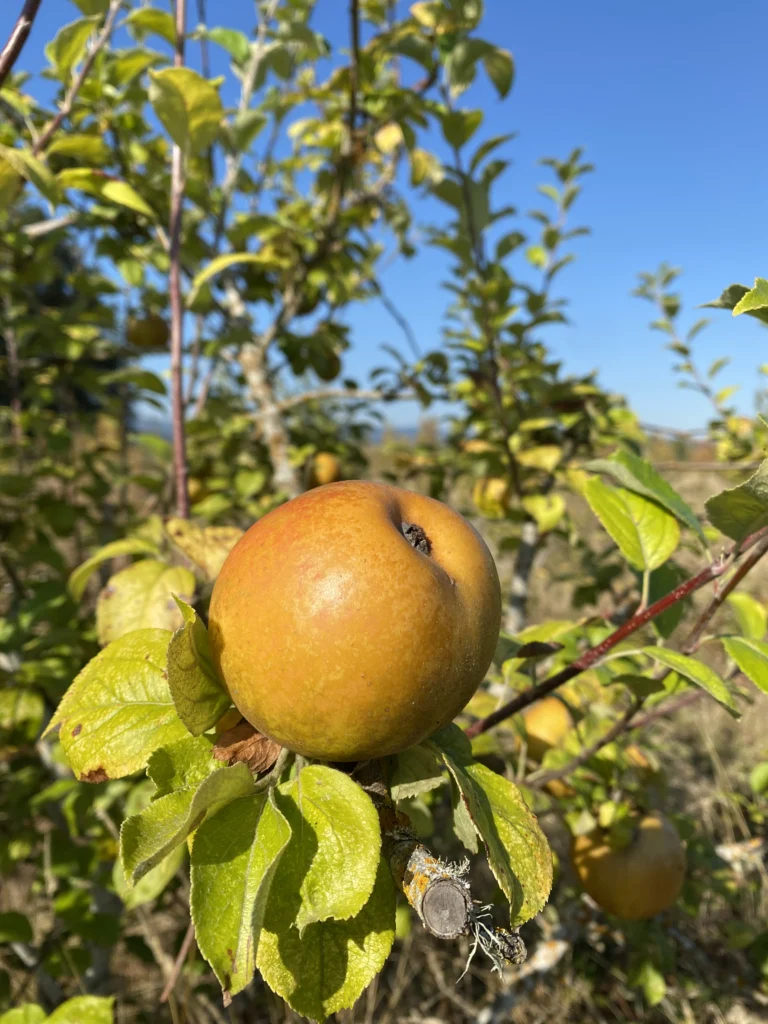
Golden Russet
An American heirloom, bronze gold and russeted all over. Long prized by cidermakers for exceptional sugar, which has earned it a reputation well out of proportion to its size.
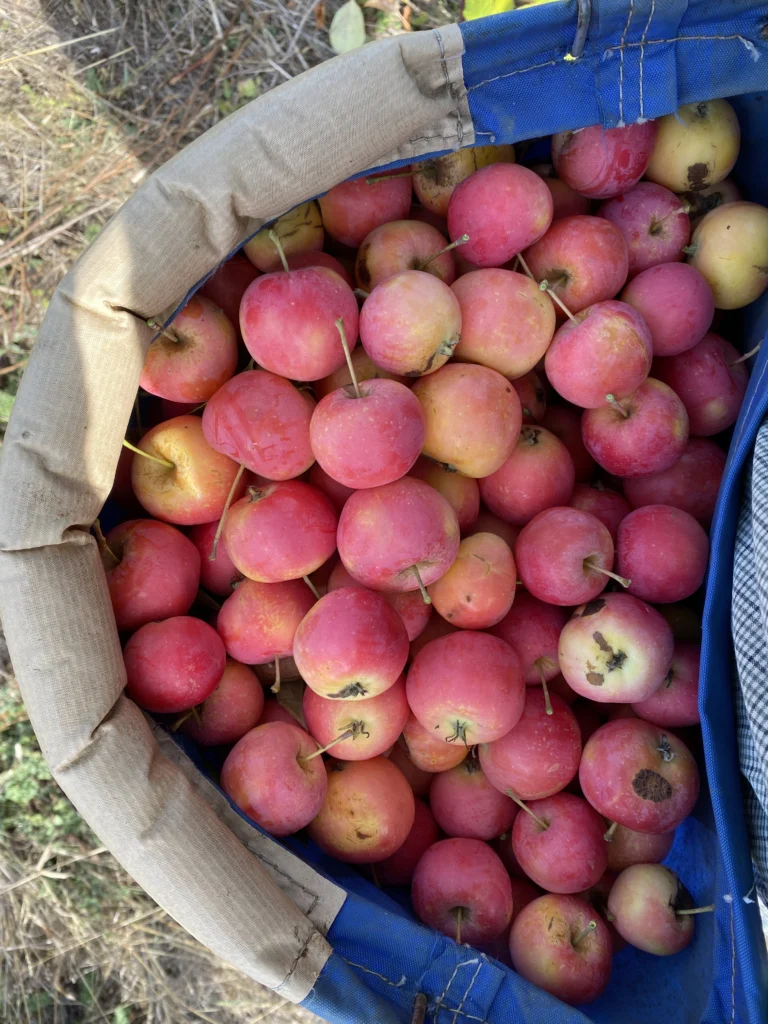
Hewes Virginia Crab
A small American cider crab, historically among the most important cider apples in Virginia. Tiny, long stemmed fruit carrying high acid and firm tannin, and it presses far better than its size suggests.
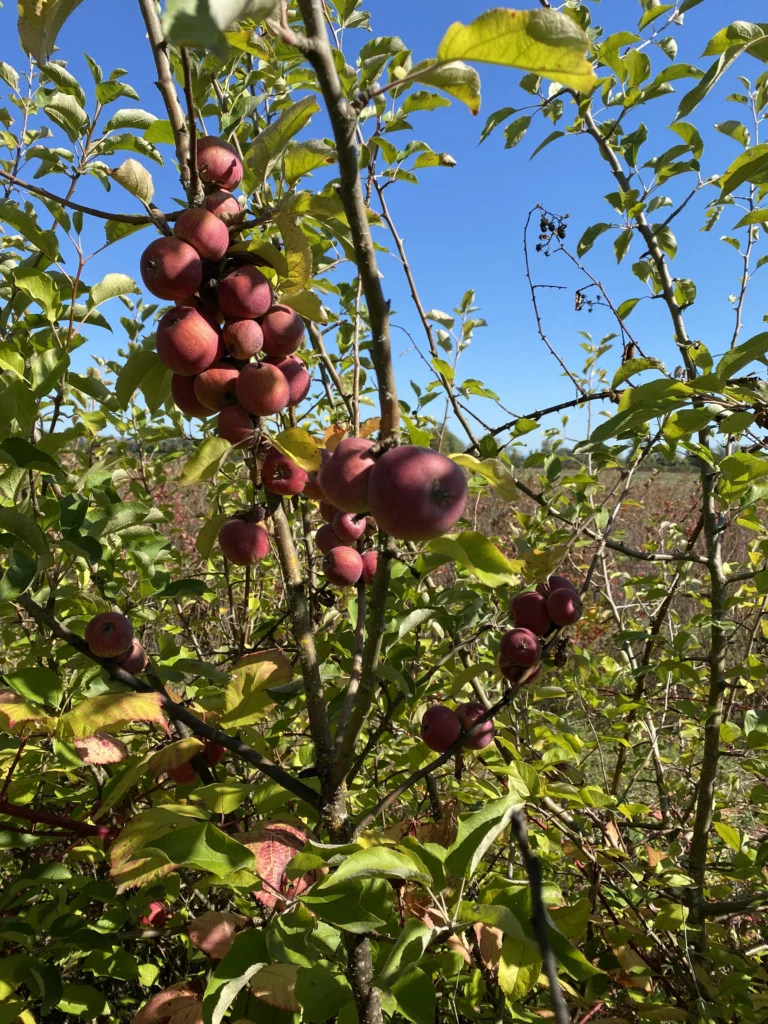
Kingston Black
The one cider apple many growers will name if pressed. Tannin and acid together in a single fruit, which is why it has a long reputation for making cider on its own rather than in a blend. Small, dark, and famously awkward to grow well.
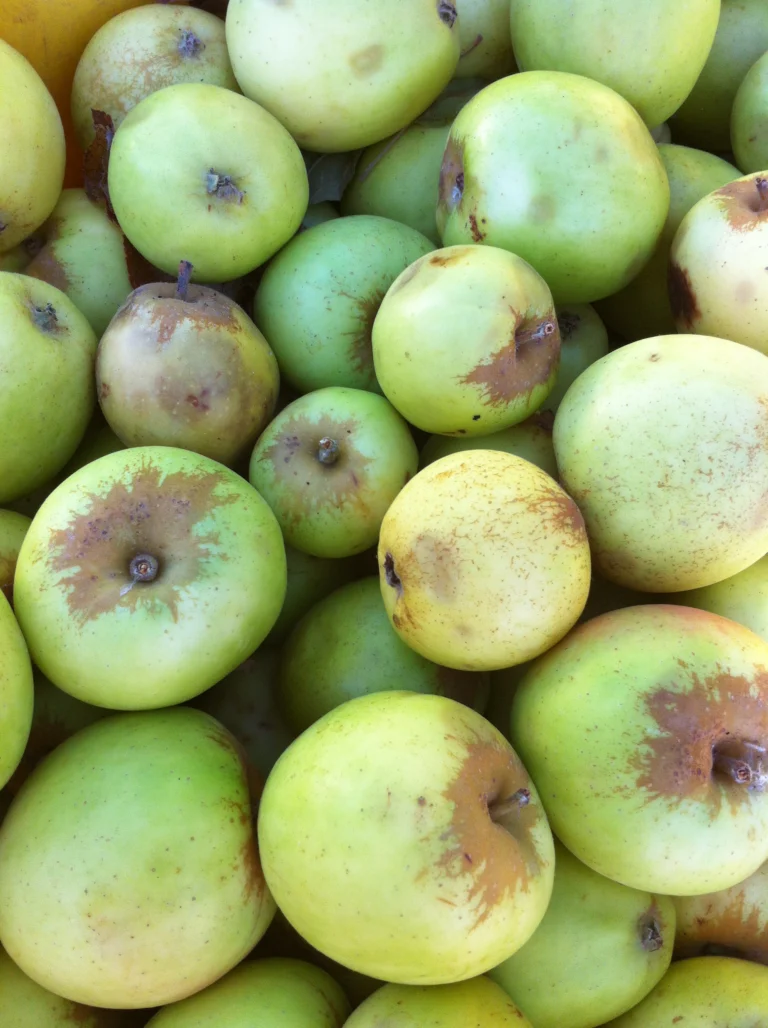
Michelin
A Normandy bittersweet, and one of the most widely planted cider apples anywhere. Soft, mild tannin and dependable sugar, which is why it turns up in so many blends: it fills out the middle of a cider without taking it over.
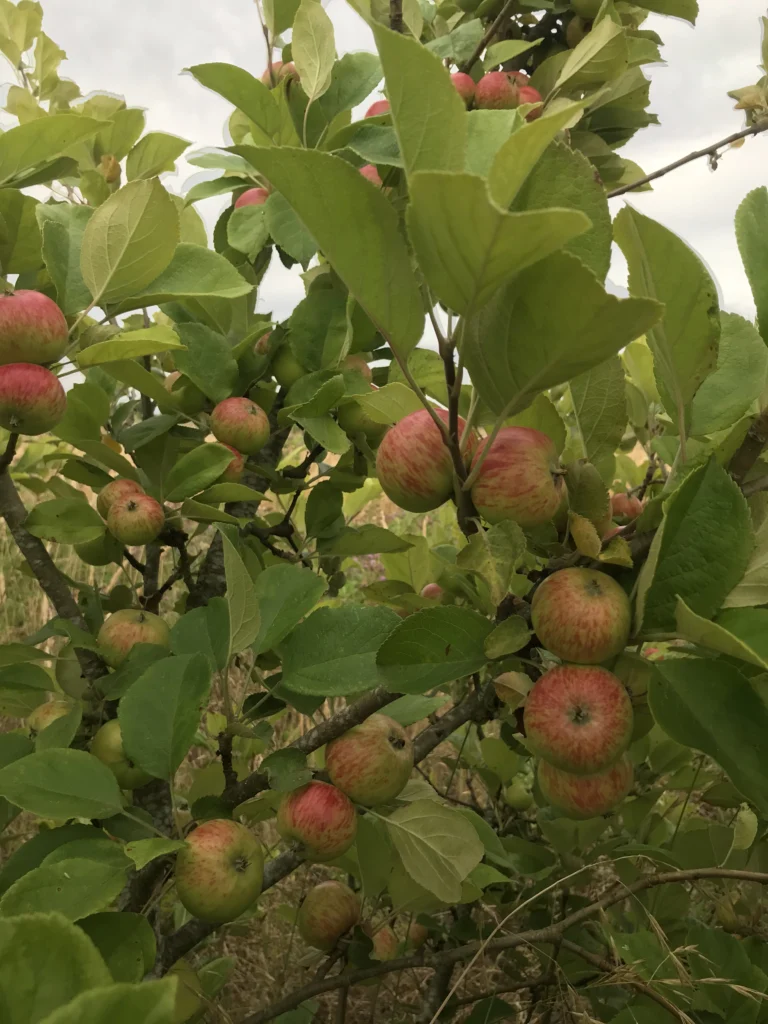
Muscat de Bernay
A Normandy bittersweet named for its scent. Where most bittersweets are valued for tannin and body, this one is grown for aroma, a muscat perfume that carries through fermentation.
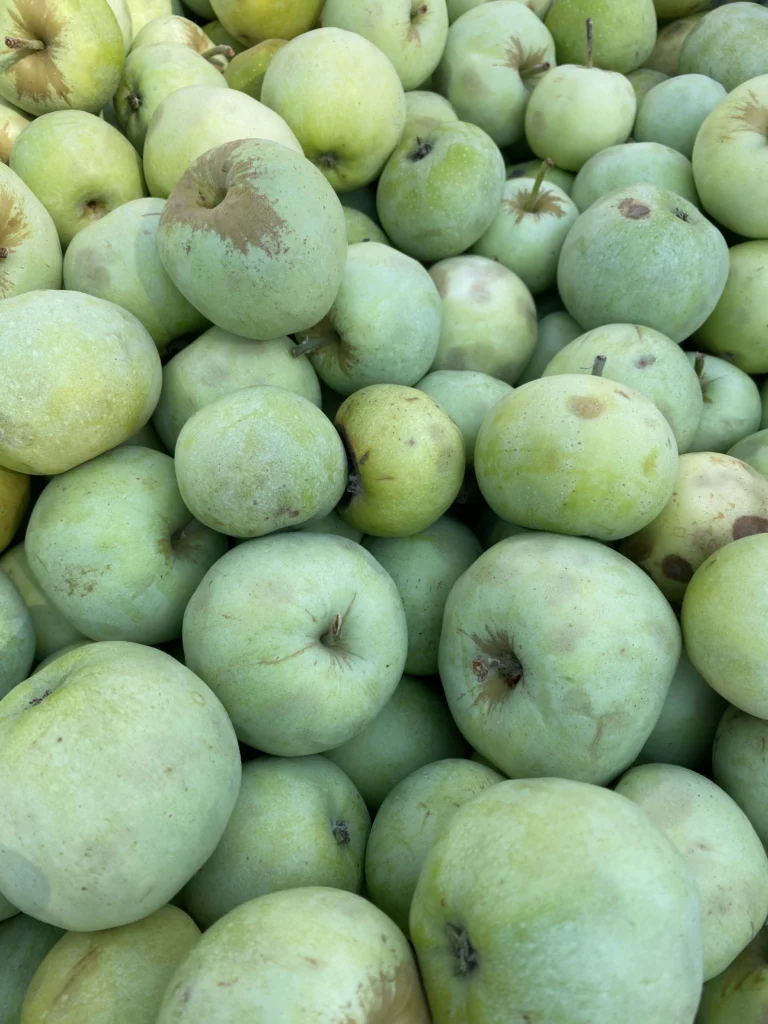
Nehou
A Normandy bittersweet, pale green to nearly white, which makes it easy to pick out of a mixed bin. Its tannin is soft rather than hard, more mouthfeel than bitterness.
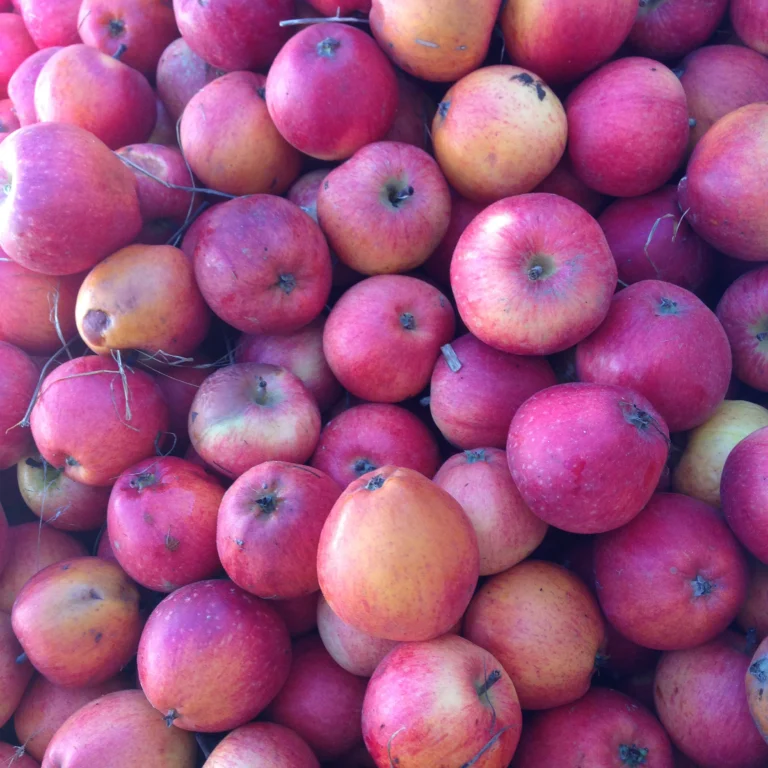
Yarlington Mill
A Somerset bittersweet with far more colour than most, crimson over yellow. Full soft tannin and good sugar, giving body and a rounded bitterness that sits well underneath sharper fruit.
The Apple Comes First
There is a temptation in food production to treat the raw ingredient as something interchangeable.
We do not see apples that way.
A bittersweet is not simply another source of apple juice. A bittersharp is not interchangeable with a supermarket dessert apple.
Each variety carries its own balance of tannin, acidity, sugar, aroma, growing characteristics, and history.
Fermentation cannot create everything that was missing from the fruit.
So we begin there. With the apple.
Orchard to Bottle
Grow the right fruit. Learn what it contributes. Ferment it carefully. Give it time.
Everything that comes later begins with the apple. What happens next is on Our Method.